

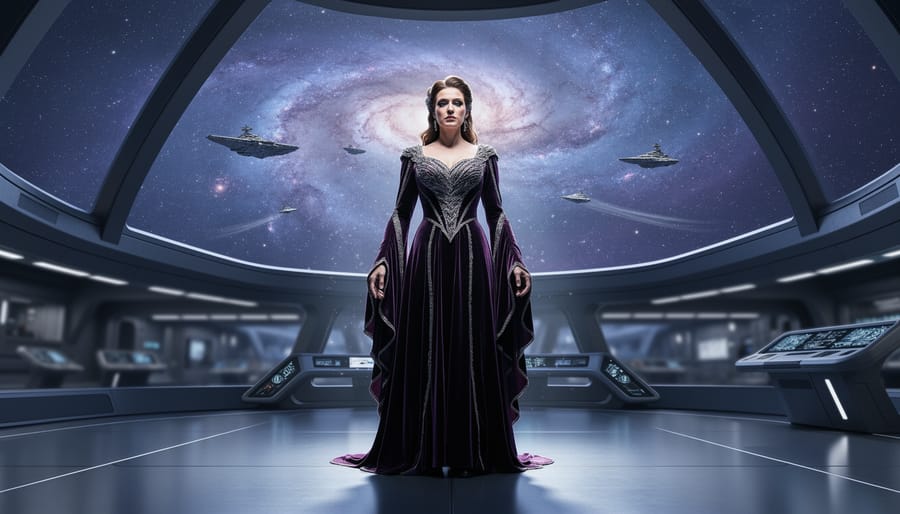
Opera space opera fuses the emotional grandeur and archetypal drama of classical opera with the galaxy-spanning adventure of space opera, creating stories where passion, betrayal, and heroism unfold across star systems with the intensity of a Verdi tragedy. This emerging narrative style doesn’t simply drop arias into starship battles. Instead, it borrows opera’s structural DNA: heightened emotion, larger-than-life characters driven by fate and desire, ensemble casts with interwoven destinies, and conflicts that resonate on both intimate and cosmic scales.
The appeal is visceral. Opera has always trafficked in the extremes of human experience, and space opera provides the perfect canvas for that scale. When you start a story with operatic principles, you’re not bound by the grounded realism that dominates much contemporary science fiction. Your characters can be driven by obsession, honor, revenge, or forbidden love without apology. Your conflicts can be both personal and civilization-defining.
Think of the Dune saga’s tragic houses, the sweeping melodrama of Star Wars, or the passionate rivalries in The Expanse. These stories succeed because they understand what opera has known for centuries: audiences crave emotional truth delivered at high volume.
For writers, this fusion offers creative freedom. You can build worlds where political intrigue mirrors La Bohème’s intimacy or where fleet battles carry the weight of Götterdämmerung’s apocalyptic finale. The key is letting character emotion drive plot choices, embracing archetypal resonance, and never being afraid of big feelings in big settings. Your galaxy doesn’t just need saving. It needs characters worth caring about when the stars go dark.
What Exactly Is Opera Space Opera?
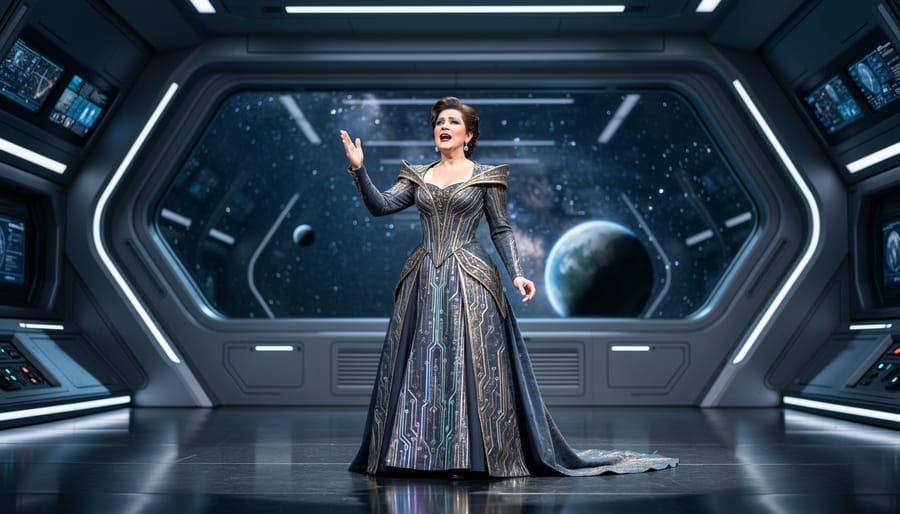
Opera space opera represents the marriage of two seemingly disparate art forms: the emotional grandeur of classical opera and the vast, star-spanning adventures of space opera. Rather than simply featuring characters who happen to enjoy opera or spaceships that broadcast arias, this narrative approach weaves operatic conventions directly into the storytelling fabric of science fiction. The result is space opera that feels deliberately theatrical, emotionally heightened, and structurally rhythmic in ways that standard space adventure rarely achieves.
At its core, opera space opera treats narrative moments with operatic sensibility. Characters don’t just experience conflict, they wrestle with it in extended introspective passages that mirror the emotional intensity of a soprano’s aria. Dialogue and exposition unfold with the deliberate pacing of operatic scenes rather than modern screenplay efficiency. The stakes aren’t merely galactic survival; they’re deeply personal, tragic, and often doomed from the start, echoing the fated lovers and fallen heroes who populate opera stages.
- Aria-like monologue
- Extended introspective passages where characters express internal conflicts in heightened, lyrical language, functioning as the narrative equivalent of an operatic solo.
- Recitative-style exposition
- Dialogue that advances plot while maintaining emotional momentum, mirroring how opera moves between sung conversation and dramatic peaks.
- Libretto structure
- A framework of distinct acts and set-piece scenes with deliberate pacing, where each sequence builds toward emotional climaxes rather than constant action.
- Ensemble vocal lines
- Multiple character perspectives that weave together like operatic voices, each distinct yet contributing to a unified emotional whole.
What distinguishes this from traditional space opera is intentionality. Standard space opera might include dramatic death scenes or sweeping romantic subplots, but opera space opera structures these elements with operatic rhythm. A character’s death becomes a prolonged, lyrical farewell rather than a quick sacrifice. Romance unfolds across acts with the inevitability of La Traviata rather than the will-they-won’t-they of adventure fiction. The difference lies not in adding volume but in embracing tragedy, fate, and emotional architecture as deliberate narrative tools.
The Dramatic DNA: What Opera Brings to Space Stories
Character Archetypes from the Opera House to the Starship
Opera has always dealt in archetypes, the larger-than-life figures whose emotions and fates drive the story forward. When you transplant these character types into a starship’s corridors or an alien battleground, something remarkable happens: they gain new dimensions while retaining their archetypal power.
The tragic hero translates beautifully into space opera. Think of a ship captain carrying impossible moral burdens, choosing between saving their crew or an entire colony, knowing either decision damns them. Like opera’s doomed protagonists, these characters pursue noble goals while their flaws ensure their downfall. Their internal conflicts echo the heightened emotional register found across many types of poetry, giving readers permission to feel deeply.
Doomed lovers work equally well when one serves the empire and the other leads the rebellion, or when biological incompatibility means their relationship has a built-in expiration date. The stakes feel operatic because the universe itself conspires against them.
The vengeful antagonist gains complexity in space settings. Perhaps they watched their homeworld burn and now seek retribution against the federation that failed to intervene. Their rage feels earned, their methods extreme but understandable, classic opera villainy with science fiction’s moral ambiguity layered on top.
Your wise mentor might be an ancient AI, a veteran of forgotten wars, or an alien elder whose species thinks in centuries. They guide the hero while carrying their own tragic knowledge, knowing they cannot prevent the coming catastrophe, only prepare their student to face it.
Structure and Pacing: Acts, Arias, and Action
Opera’s five-act structure offers space opera writers an alternative to Hollywood’s ubiquitous three-act framework. Traditional opera divides its story into distinct acts with clear emotional peaks, each building toward a climactic moment before allowing the audience to breathe. This creates a rhythm of intensity and release that translates beautifully to epic space narratives.
Consider structuring your story in acts rather than rigid beginning-middle-end segments. Act One introduces your universe and characters. Act Two complicates their world with conflict. Act Three brings crisis and betrayal. Act Four plunges into darkness and consequence. Act Five resolves through sacrifice or transformation. Each act culminates in a set piece, a massive space battle, a devastating revelation, a planet’s destruction, that serves as the narrative equivalent of an opera’s grand finale before the curtain.
Within each act, think in scenes rather than chapters. Opera moves through recitative (dialogue and plot advancement) into aria (emotional introspection) into ensemble pieces (multiple characters’ perspectives colliding). Your space opera can mirror this flow: action sequences transition into quiet character moments, which build toward scenes where multiple viewpoints clash in real time.
This structure naturally creates more dramatic peaks than three-act plotting. Instead of one midpoint twist and one climax, you’re building five escalating moments of maximum tension. The pacing feels both grander and more intimate, matching the scope of space opera with opera’s emotional precision.
Why Writers Are Turning to This Fusion Now
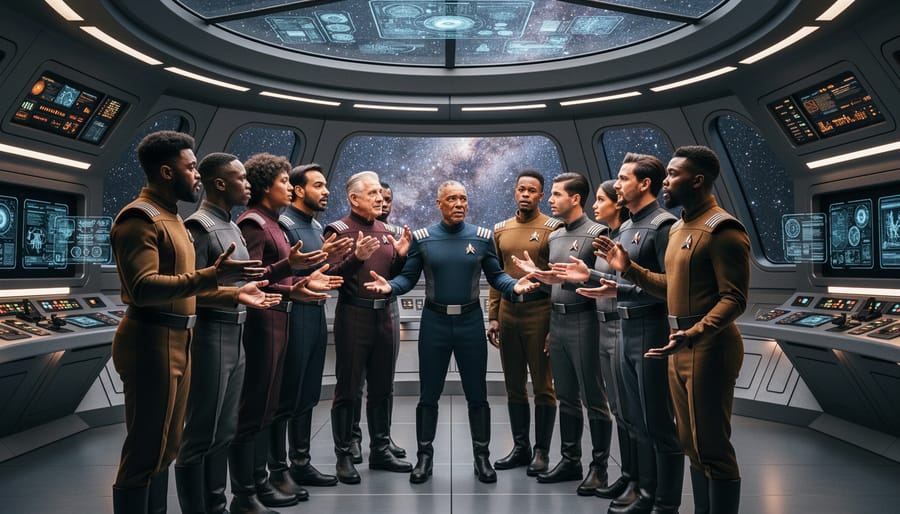
The science fiction market has never been more crowded, and readers are actively seeking stories that deliver something beyond recycled tropes. Opera space opera hits that sweet spot because it offers emotional depth that pure adventure narratives often miss. Readers in 2026 aren’t just looking for laser battles and alien worlds, they want characters who wreck them emotionally, conflicts that resonate on a human level even in the far reaches of space, and narratives that stick with them long after the final page.
Media has primed audiences for this fusion. Streaming adaptations have shown that genre-blending works commercially when it’s done well, and viewers who’ve watched emotionally complex science fiction onscreen are now hunting for similar experiences in written form. This creates opportunity for writers willing to push beyond standard space opera conventions into territory that prioritizes feeling alongside spectacle.
The broader space opera trend remains robust, as evidenced by events like Calgary Expo 2026, which drew expected 100,000 attendees in April. That level of genre enthusiasm signals a hungry readership, but also intense competition. Writers need angles that distinguish their work from the dozens of other space adventures launching monthly.
Opera space opera provides that differentiation. It’s niche enough that the market isn’t saturated, yet accessible enough that readers already familiar with space opera will recognize the core elements. You’re not asking readers to learn an entirely new genre, you’re offering them a familiar playground with unexpected emotional equipment.
Publishers and agents notice fresh approaches because they solve a marketing problem: how do you pitch a space opera that stands out? “Space opera with operatic emotional structure and tragic archetypes” gives acquisitions teams a hook they can work with. It positions your manuscript as both genre-compliant and genuinely distinctive, which is exactly the balance that gets proposals past the slush pile in 2026’s competitive landscape.
Crafting Your Opera Space Opera: Practical Techniques
The Aria Moment: When to Let Characters Sing
An aria moment stops the action and lets a character’s interior world take center stage. In opera, the heroine doesn’t just mention her heartbreak, she explores every facet of it while the orchestra swells. Your space opera equivalent might be a ship captain alone on the bridge at 0300 hours, wrestling with the order that will save the fleet but sacrifice a colony. Write these moments when the external stakes are highest but the character needs to process what it all means before they act.
The key is earned emotion. Your character has just discovered their mentor was the architect of the genocide, or they’re about to trigger the weapon that ends the war at an unthinkable cost. This isn’t the place for everyday reflection. The language should elevate without becoming purple, think lyrical precision rather than flowery excess. A good aria moment reveals something essential about who your character is when stripped of their rank, their mission, their armor.
Limit yourself to two or three of these per novel. More frequent and they lose impact, becoming indulgent rather than powerful. If you’re writing outside your own experience of grief, command, or moral crisis, shadow research helps you ground these heightened moments in authentic emotional logic. The aria should feel like the only possible response to an impossible situation.
Building Your Ensemble Cast
In opera, each vocal part, soprano, tenor, bass, has a distinct timbre and range, yet they harmonize to create something larger than any solo performance. Your space opera ensemble should work the same way.
Start by giving each character a unique perspective shaped by their role and background. Your ship’s engineer thinks in systems and tolerances; your diplomat speaks in measured, politically coded language; your pilot processes the world through spatial awareness and split-second decisions. These differences shouldn’t just be personality quirks, they should fundamentally shape how each character interprets events and expresses themselves.
Create moments where these voices overlap and contrast. When your crew debates whether to investigate the derelict station, let each character’s argument reveal their worldview. The scientist sees discovery; the security officer sees threat; the captain balances both against crew safety. This interplay creates natural tension without forced conflict.
Avoid the trap of making one character the “main voice” who narrates while others merely react. Like an opera ensemble, each should have moments to step forward. Your pilot might take the lead during a chase sequence; your medic becomes central when facing a biological crisis. Let their distinct voices drive different sections of your narrative, creating a richer, more dimensional story.
Avoiding the Pitfalls: When Opera Overwhelms Opera

The allure of opera space opera lies in its emotional intensity, but that same power becomes your greatest risk when you lose control of the dial. The most common pitfall? Prose so purple it bleeds into parody. When every scene demands maximum emotional voltage, readers grow numb to the spectacle. Your tragic hero’s existential crisis loses impact when it sounds identical to their reaction about the coffee replicator breaking.
Melodrama without earned stakes is the kiss of death. Opera works because the audience understands why the soprano is devastated, we’ve watched her journey, seen her choices narrow, felt the trap closing. If you skip that foundation and jump straight to the big emotional moment, you’ve written hollow theatrics. Your readers will roll their eyes instead of reaching for tissues.
Pros
- Creates deeper emotional resonance that distinguishes your work from standard space opera.
- Provides natural structure for character-driven narratives with clear dramatic peaks.
- Allows exploration of complex themes through heightened, poetic language.
- Offers memorable set pieces that readers will quote and discuss.
Cons
- Easy to slip into overwrought prose that distances readers rather than engaging them.
- Requires careful balance to maintain plot momentum alongside emotional introspection.
- Risk of losing the science fiction elements that ground the story’s world.
- Can alienate readers expecting traditional space opera pacing and action.
Another trap: sacrificing your science fiction core on the altar of emotional spectacle. Your space setting isn’t just wallpaper for a costume drama. The technology, the alien cultures, the physics of your universe, these elements should interact with and complicate your characters’ emotional journeys, not disappear during the big moments. When your protagonist delivers their aria, make sure they’re still standing on a spaceship, not a generic stage.
Keep your plot coherent. Opera can get away with convoluted narratives because the music carries the audience through confusion. You don’t have that luxury. Every emotional peak needs to emerge logically from what came before, and every character choice should track even when it’s tragic.
Finding Your Community and Resources
Writing opera space opera doesn’t mean working in isolation. The science fiction writing community thrives on experimentation, and you’ll find fellow travelers eager to explore this fusion alongside you.
Start with online writing communities that embrace genre-bending projects. Sites like Absolute Write, r/fantasywriters, and specialized science fiction forums host writers experimenting with unconventional subgenres. These spaces offer critique partners who understand both the operatic emotional intensity and the space opera worldbuilding you’re attempting to balance.
Look for submission calls that specifically welcome innovative genre blending. Many small presses and literary magazines actively seek fresh takes on established genres. Anthologies focusing on experimental science fiction or emotional depth in speculative fiction make ideal targets for opera space opera stories. When you’re ready to self-publishyou’ll have full creative control over this distinctive fusion.
Genre conventions provide invaluable networking opportunities. Calgary Expo, running April 23-26, 2026 at the BMO Centre and expecting to draw 100,000 fans, demonstrates the robust enthusiasm for science fiction and its subgenres. Events like these connect you with readers hungry for innovative storytelling and fellow writers pushing genre boundaries.
Online workshops focused on science fiction craft can sharpen your technical skills while you develop your operatic voice. Many writing organizations offer courses on emotional depth, character complexity, and structural innovation, all essential tools for this approach.
Don’t underestimate the power of music itself as a resource. Listening to actual opera while drafting can help you internalize the rhythm, emotional peaks, and dramatic pacing you’re trying to capture in prose.
The beauty of opera space opera lies in its invitation to break rules and forge something uniquely yours. In a market saturated with familiar narratives, this fusion offers you a chance to stand out, not by shouting louder, but by digging deeper into emotion and spectacle. Writers who take creative risks, who blend genres in unexpected ways, are the ones readers remember.
You don’t need permission to experiment. Start small: take a scene you’re already working on and ask yourself what would happen if you amplified the emotional stakes to operatic levels. Give your protagonist an aria moment. Let tragedy and grandeur share the same sentence. See what emerges when you trust the heightened intensity that opera brings to the cosmic canvas of space opera.
This approach won’t work for every story, and that’s perfectly fine. The point isn’t to force a trend but to discover whether this particular fusion unlocks something powerful in your voice. Genre boundaries exist to be tested, and the most compelling work often happens at those edges.
We’d love to hear how your experiments unfold. Share your opera space opera scenes, drafts, or questions with the Westerly Winds community. Whether you’re writing doomed lovers on a generation ship or a vengeful admiral’s final confrontation, your work adds to this evolving conversation. Your voice matters, and your willingness to try something different makes the entire genre richer.
