

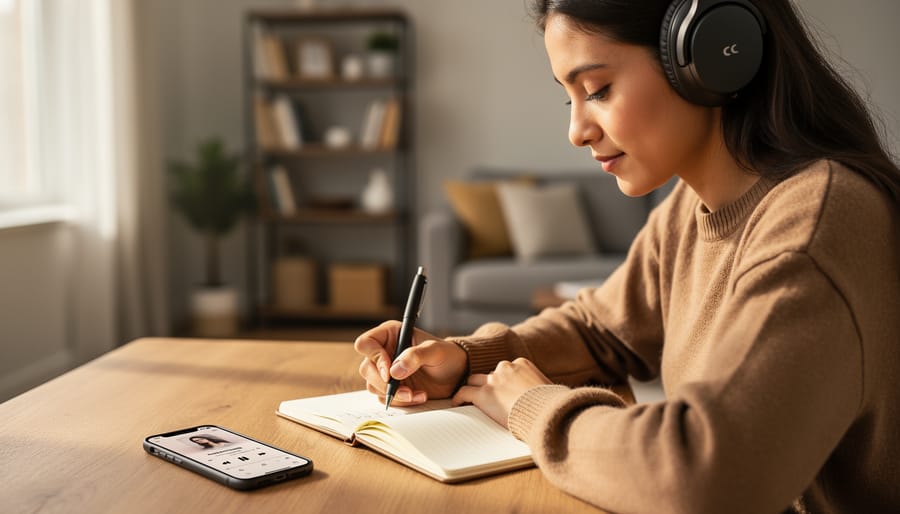
Biography audiobooks offer aspiring writers an immersive classroom where narrative craft, character depth, and voice converge in real time. Unlike reading print biographies, listening allows you to absorb how skilled narrators bring historical figures to life through pacing, emphasis, and tone, while commuting, exercising, or folding laundry. This dual-channel learning strengthens your understanding of story structure and emotional resonance without requiring dedicated desk time.
For writers, the value runs deeper than convenience. Biography audiobooks model how to sustain reader interest across decades of a subject’s life, balance personal detail with historical context, and craft scenes that feel intimate even when describing public events. You hear where authors choose to slow down for reflection and where they accelerate through transitions. You notice which biographical techniques create connection and which feel distant. This passive education sharpens your instincts for your own narrative projects.
Access has never been easier. Platforms like Audible offer over 180,000 downloadable titles, while connects you with local independent bookstores through a credit-based membership that includes a 30% discount on additional purchases. Whether you’re drawn to literary figures, activists, or fellow writers whose journeys mirror your own aspirations, the biography audiobook library in 2026 provides both inspiration and a masterclass in storytelling craft. The question isn’t whether to listen, but which voice will teach you next.
What Makes Biography Audiobooks Different from Reading
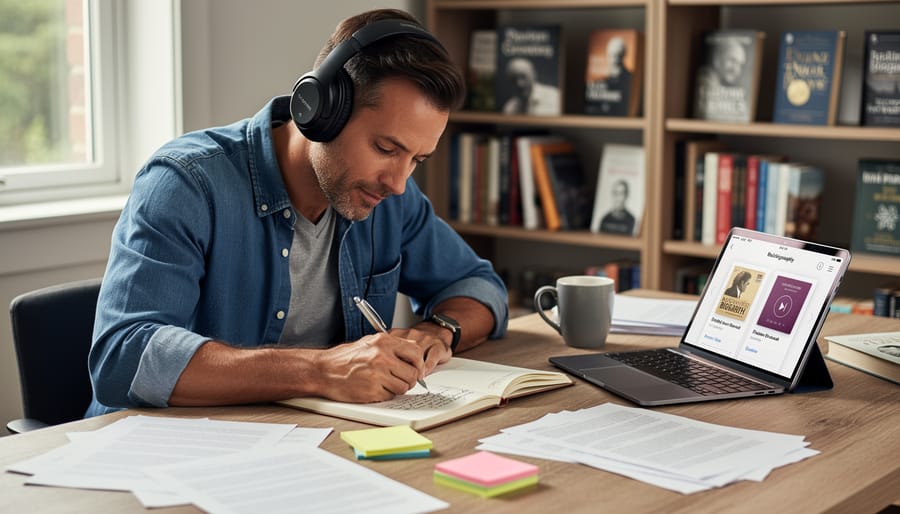
The difference between reading a biography and listening to one isn’t just about convenience, it’s a fundamentally different encounter with someone’s life story. When you read, you control the pace, the pauses, the emphasis. When you listen, a skilled narrator becomes your guide, making interpretive choices that shape how you experience the subject’s triumphs and failures. A crack in the narrator’s voice during a pivotal moment can land with more emotional weight than a paragraph you might have skimmed on the page.
This vocal dimension connects biography audiobooks to storytelling’s oldest form. Before written language, communities passed down histories and legends through oral tradition, where the teller’s inflection and timing carried as much meaning as the words themselves. That same dynamic comes alive when a narrator performs a biography. You hear the rhythm of a life unfolding, the dramatic pauses before major decisions, the acceleration through periods of intense creativity. For writers, this offers a masterclass in pacing that’s harder to detect when your eyes are scanning lines of text.
The multitasking advantage matters too, especially for writers juggling day jobs, family obligations, and their creative practice. You can absorb the story of how Toni Morrison balanced motherhood with her debut novel while you’re doing exactly that kind of balancing act yourself, folding laundry, commuting, or taking a walk to clear your head after a difficult writing session.
Writers often describe listening to biographies as having a conversation with the subject, particularly when the work is narrated by the author themselves or by someone who deeply understands the material. You’re not just collecting information about their process; you’re inhabiting their world for hours at a stretch, picking up on subtleties of tone and perspective that inform how you might approach voice in your own work. The intimacy of having someone’s life story told directly into your ear creates a connection that makes their struggles feel less isolating and their breakthroughs more attainable.
How Biography Audiobooks Strengthen Your Writing Skills
Learning Story Structure from Real Lives
Biographies are masterclasses in story structure disguised as real life. When you listen to a well-crafted biography, you’re absorbing how skilled writers transform raw chronological events into compelling narratives with clear dramatic arcs, just as fiction requires.
The best biographies don’t simply recount what happened when. They identify the central conflict or question driving their subject’s life, then arrange events to build tension toward pivotal moments. You’ll hear how biographers choose where to start a story often beginning mid-crisis or at a turning point rather than birth, demonstrating how opening scenes establish stakes immediately.
Listen for how biographers handle pacing through decades of material. They compress less relevant periods into brief summary, then slow down during crucial moments, dwelling on details that reveal character. This selective focus teaches you which scenes deserve full dramatization in your own work versus which need only a sentence.
Character development in biographies shows real people evolving through choices and consequences. You’ll notice how repeated behaviors become patterns that define someone’s character arc, how contradictions make subjects feel three-dimensional, and how internal struggles manifest through external actions. Even plot twist tips emerge from biographical listening when unexpected revelations or reversals of fortune demonstrate how surprising yet inevitable turns feel when properly foreshadowed.
The structural lessons are everywhere once you listen with a writer’s ear, watching how truth gets shaped into art.
Understanding Voice and Perspective
When you listen to a biography, you’re not just absorbing a life story, you’re studying a fundamental choice every writer makes: whose voice tells this story, and from what vantage point?
Memoirs place you inside the subject’s head, offering direct access to their thought processes and emotional truths. The first-person intimacy teaches writers how honest self-reflection creates authenticity, and how a distinctive voice emerges when someone stops performing and starts revealing. You hear what it sounds like when a narrator trusts the reader enough to share uncertainty alongside conviction.
Third-person biographies demonstrate different craft decisions. The biographer becomes an invisible guide, selecting what to emphasize and what to leave out. Listen to how skilled biographers weave context around their subject’s choices, or how they handle gaps in the historical record without inventing details. You’re learning the delicate balance between interpretation and fact, between showing admiration for your subject and maintaining critical distance.
The distinction between authorized and unauthorized biographies teaches another crucial lesson: how proximity to your subject shapes the story you can tell. Authorized biographies often gain intimate access but may soften certain edges. Critical or unauthorized approaches bring sharper analysis but might lack insider perspective. Neither is inherently better, but the trade-offs mirror choices fiction writers face when deciding how close to draw their narrative lens.
Pay attention to these structural choices as you listen. The perspective that tells a story fundamentally shapes what that story becomes.
Absorbing the Creative Process of Other Writers
Literary biographies offer writers something uniquely valuable: a behind-the-scenes look at how your literary heroes actually did it. You’re not just learning about their published works, you’re hearing about the messy drafts, the paralyzing self-doubt, and the persistence that eventually led to breakthrough.
When you listen to a biography of Sylvia Plath, you discover how she crafted her voice through relentless revision and journaling. A biography of James Baldwin reveals how he developed his powerful essay style while navigating rejection and financial struggle in 1950s Paris. These aren’t abstract success stories; they’re detailed accounts of actual writing practices, daily routines, and the psychological realities of building a career from nothing.
The audiobook format makes these lessons particularly powerful because you hear the patterns across multiple lives. Listen to three literary biographies back-to-back and you’ll notice recurring themes: nearly every established author faced years of rejection, struggled with impostor syndrome, and found their authentic voice only after abandoning what they thought they “should” write.
This isn’t just inspiration, it’s practical education. You learn that Virginia Woolf rewrote sections dozens of times, that Toni Morrison wrote in stolen early-morning hours while raising children, that Raymond Carver’s breakthrough came after ruthless editing stripped his prose to essentials. These specific details become part of your own creative toolkit, proof that the challenges you face aren’t personal failures but universal stages in the writer’s journey.
Where to Find Biography Audiobooks in 2026
Finding biography audiobooks has never been easier, with platforms offering everything from massive catalogs to community-focused alternatives that align with your values as a writer. The landscape in 2026 gives you genuine choices in how you access these transformative resources.
Audible remains the dominant player, offering a catalog of over 180,000 audiobooks that includes extensive biographical content. Their membership model provides credits you can exchange for titles, making it cost-effective if you listen regularly. The selection spans classic literary biographies, contemporary memoirs by working writers, and deep dives into creative figures across disciplines. The sheer volume means you’ll find both mainstream titles and obscure biographical gems that might reshape your understanding of the writing life.
For writers who value supporting independent bookstores, offers a compelling alternative. This platform channels your audiobook purchases directly through local bookstores, letting you access digital content while keeping dollars in your writing community. Members receive audiobook credits through an automatic recurring charge, plus a 30% discount on additional purchases beyond their monthly credit. It’s a way to build your biographical listening library without abandoning the independent bookstores that host readings, stock debut novels, and anchor literary neighborhoods.
| Platform | Key Strength | Membership Model | Best For |
|---|---|---|---|
| Audible | Extensive catalog (180,000+ titles) | Credit-based subscription | Maximum selection and convenience |
| Supports local independent bookstores | Credits plus 30% member discount | Community-minded listeners | |
| Library systems | Free access through existing membership | No cost with library card | Budget-conscious writers |
Don’t overlook your local library system, which increasingly offers digital audiobook lending through apps like Libby or Overdrive. While selection varies by system and popular titles may have wait lists, it’s hard to beat free access when you’re building foundational knowledge. Many libraries prioritize biographical content, understanding its educational value.
The platform you choose matters less than establishing a consistent practice of learning from the lives of other writers and creative figures. Test different services, compare what biographical titles they prioritize, and pick the one that removes friction from your listening habit. The goal is making these resources so accessible that turning to a biography becomes second nature when you need inspiration or craft guidance.
Biography Audiobooks Worth Your Time as a Writer

The best biography audiobooks for writers aren’t necessarily the most famous lives, they’re the ones that reveal something essential about the creative process, persistence through failure, or finding an authentic voice. Here’s where to focus your listening time for maximum craft development.
Start with literary biographies that show the messy reality behind published success. Lives of the great novelists and poets reveal patterns you can apply to your own journey: the years of rejection, the day jobs that funded the writing, the relationships that both inspired and complicated the work. These aren’t sanitized success stories. They’re honest accounts of how real writers navigated self-doubt, financial pressure, and the terror of the blank page while still producing work that endures.
Memoirs by working writers about their craft offer different value. These first-person accounts let you hear directly how someone built their practice, developed discipline, or broke through a creative block that nearly ended their career. The intimacy of memoir, especially in audio format, creates a mentorship feeling, like a successful writer is sitting across from you, sharing what actually worked and what didn’t.
Don’t limit yourself to literary figures. Biographies of creative people from other fields, musicians, painters, filmmakers, designers, often teach the most transferable lessons about the creative life. A biography of a jazz musician’s improvisational process can illuminate how to approach revision. An artist’s journey to finding their signature style parallels every writer’s search for authentic voice. These cross-disciplinary biographies prevent you from developing tunnel vision about what a “writer’s life” should look like.
Look for biographies that dig into specific creative periods rather than sweeping cradle-to-grave narratives. The most useful ones for writers often focus on a crucial decade, a particular project’s creation, or a transformative relationship. These focused biographies provide depth over breadth, letting you really understand the conditions and decisions that shaped important work.
Recent releases on platforms like Audible and continue expanding this category, though not every biography translates well to audio. The best ones combine solid research with engaging narration that brings the subject’s world alive. When choosing, read sample reviews that mention narrative quality and narrator performance, these factors determine whether you’ll absorb the lessons or abandon it halfway through.
Build your listening list around what you need to learn right now. Wrestling with structure? Choose a biography that details how someone shaped sprawling material into compelling form. Struggling with voice? Find a memoir that tracks a writer’s evolution from imitation to originality. Facing rejection? Pick a biography that honestly depicts the years between first attempts and breakthrough success.
The goal isn’t to collect titles, it’s to let these real creative lives inform and encourage your own.
Making Biography Audiobooks Part of Your Writing Practice
The most effective approach treats biography audiobooks as a research tool alongside your creative practice, not a replacement for writing time. Set boundaries for listening sessions so you’re absorbing insights without sliding into perpetual consumption mode that delays actual work.
When creative blocks hit, queue up biographies of writers who faced similar struggles. Hearing how Maya Angelou pushed through periods of silence or how Stephen King rebuilt his career after addiction can provide the exact encouragement you need in that moment. The specificity of their struggles makes generic advice unnecessary.
Build listening into existing routines rather than carving out new time. Commutes, walks, household tasks, and exercise sessions become learning opportunities. This approach mirrors how published authors often describe gathering material through observation, turning downtime into research mode.
For craft development, focus your note-taking on process rather than biography plot points. When you hear about a writer’s revision method or their approach to character development, jot down how it might apply to your current project. This active engagement transforms passive listening into shadow research for your own work.
The balance question matters. If you’re listening to writing biographies more than you’re actually writing, adjust. A useful rule: for every hour spent with biographical content, spend three hours creating your own work. Let the biographies inform and inspire your practice, but never become a substitute for sitting down and wrestling with your own pages. The masters whose lives you’re studying would tell you the same thing.
Biography audiobooks offer writers something invaluable: a portable, flexible format for learning the craft from those who’ve mastered it. Whether you’re commuting, washing dishes, or taking a break from your own manuscript, you can absorb the lived experiences of writers who’ve navigated rejection, found their voices, and built lasting careers. These aren’t just stories, they’re blueprints for resilience, creativity, and growth.
The beauty of this format is its accessibility. Biography audiobooks fit seamlessly alongside other writing tools in your development toolkit, requiring nothing more than your attention and curiosity. They remind us that every accomplished author started somewhere, faced doubts, and pushed through.
We’d love to hear from the Westerly Winds community: which biography audiobooks have shaped your understanding of the writing life? What lessons have you drawn from listening to another writer’s journey? Share your favorite biographical listens and the insights they’ve given you. Your experiences could inspire a fellow writer who needs exactly that story right now.
