


A DC writers room is a collaborative model adapted from television and film production where writers gather regularly to brainstorm, critique, and develop their work together in a structured, supportive environment. Rather than working in isolation, writers in this room-style setup benefit from collective feedback, accountability, and the creative energy that comes from shared storytelling sessions. The approach transforms the solitary writing experience into a dynamic group practice that accelerates skill development and keeps motivation high.
The concept borrows its name and structure from the legendary writers rooms of DC Comics and Hollywood, where teams of writers break story arcs, troubleshoot plot holes, and polish dialogue together. When applied to a writer community this model creates an environment where both emerging and experienced writers can thrive through regular interaction and mutual support.
What makes this approach particularly effective is its balance of structure and creativity. Sessions typically follow a predictable format with set meeting times, rotating leadership roles, and clear guidelines for feedback. This framework removes the uncertainty that often paralyzes individual writers while fostering the kind of honest, constructive dialogue that pushes everyone’s work forward.
For writers tired of the echo chamber of their own thoughts or struggling to maintain momentum on long projects, the writers room model offers a proven alternative. You’ll find accountability partners who understand your struggles, fresh perspectives on stubborn story problems, and a built-in cheering section celebrating your wins.
What Is the DC Writers Room Approach?

The DC Writers Room approach transforms the traditional Hollywood writers’ room into a blueprint for literary community building. In television and film production, a writers’ room brings together a team of writers who collaborate intensively to develop storylines, break episodes, refine dialogue, and solve narrative problems together. Rather than each writer working in isolation, they combine their creative energies in real-time brainstorming sessions where ideas bounce freely, weak spots get identified quickly, and the best solutions emerge through collective thinking.
When adapted to broader writing communities, this model creates dedicated spaces, whether a coffee shop corner, a library meeting room, or a Zoom call, where novelists, poets, essayists, and other literary writers gather with the same collaborative spirit. These aren’t traditional workshop settings where one person reads while others listen and critique. Instead, writers actively work together on projects, troubleshoot plot holes in real time, brainstorm character motivations, swap feedback on opening paragraphs, and hold each other accountable to writing goals.
The literary adaptation shifts focus from producing a single unified script to supporting multiple individual projects simultaneously. A session might start with one writer presenting a stuck scene, transition to a group brainstorm on publishing strategies, then end with timed writing sprints where everyone works quietly together. The room becomes an incubator where creativity multiplies through proximity and trust, where asking “Does this work?” gets answered by people who understand your vision and want to see you succeed. This approach recognizes that writing, though solitary in execution, benefits enormously from collaborative development and shared momentum.
Why Writers Thrive in Room-Style Communities
Breaking Through Isolation
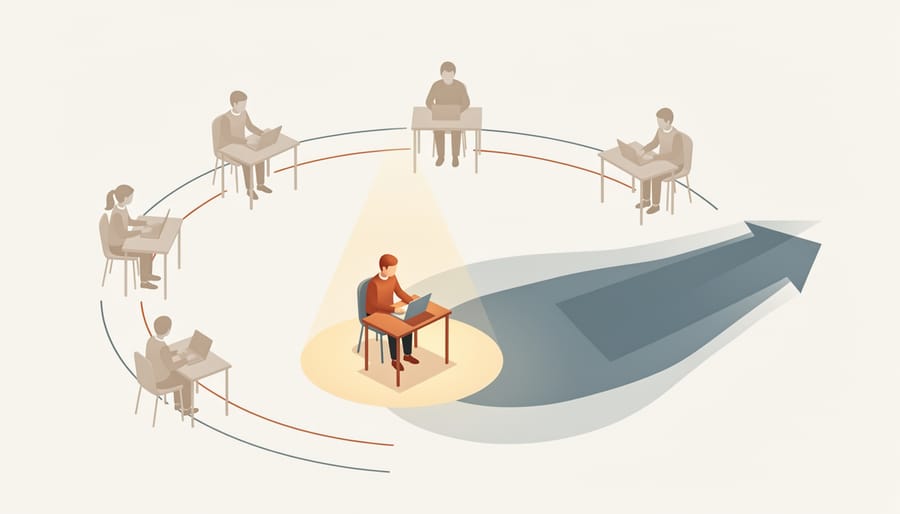
Writing is famously solitary work. You spend hours alone with your thoughts, wrestling with plot holes at 2 a.m., wondering if anyone will care about the story you’re crafting in isolation. That solitude can quickly turn into loneliness, which research shows writers often cope with loneliness through poetry and other creative outlets, but that doesn’t always solve the underlying need for human connection.
A writers room flips this script entirely. Instead of facing blank pages alone, you’re surrounded by people who understand the peculiar challenges of creating something from nothing. When you hit a wall with character motivation, someone across the table might offer the exact insight you needed. When you doubt whether your work matters, you see others pushing through similar struggles, which reminds you that you’re not alone in this messy, beautiful process.
The emotional support matters as much as the craft development. Knowing that others are showing up, doing the work, and cheering for your progress creates a safety net that catches you when motivation falters.
Elevating Your Craft Through Collective Intelligence

When you share your manuscript-in-progress with five other writers, you don’t get five identical responses, you get five distinct entry points into your story. One reader spots the pacing lag you’ve become blind to. Another questions a character motivation that seemed obvious to you but reads as confusing from the outside. A third highlights a brilliant moment you almost cut, giving you confidence to lean into it. This multiplicity of viewpoints doesn’t dilute your vision; it sharpens it by revealing what’s actually on the page versus what exists only in your head.
Brainstorming sessions in a writers room setting unlock ideas you’d never reach alone. When you’re stuck on how your protagonist escapes a seemingly impossible situation, throwing the problem to the group generates ten solutions in fifteen minutes, some brilliant, some absurd, all sparking new neural pathways. Even the “bad” ideas often contain a seed that leads you somewhere unexpected. This collective creativity doesn’t mean writing by committee; it means accessing a broader imaginative reservoir while you remain the final decision-maker.
Constructive critique in a trusted room teaches you to separate your ego from your work. Regular exposure to feedback helps you develop the professional skill of hearing “this isn’t working” without hearing “you’re not a writer.” You learn to ask better questions, to distinguish between a reader identifying a genuine problem and simply preferring a different kind of writing adventure. Over time, you internalize these multiple perspectives, developing a stronger internal editor informed by the collective intelligence you’ve absorbed.
Key Elements of a Successful Writers Room Community
Establishing Ground Rules and Culture
Every successful writers room begins with clear expectations. Before your first brainstorming session or manuscript critique, establish ground rules that everyone understands and commits to upholding. These guidelines aren’t about stifling creativity, they’re about creating psychological safety so members feel comfortable taking creative risks and sharing vulnerable early drafts.
Start with feedback protocols. Define what constructive criticism looks like in your group: specific observations rather than vague reactions, suggestions framed as questions rather than commands, and comments focused on the work rather than the writer. Many established communities follow best practices for writers groups that emphasize balancing encouragement with honest critique. Writers who learn craft through collaborative feedback need both support and challenge.
Confidentiality matters profoundly. Writers share unpublished work, personal stories, and creative struggles that deserve protection. Make explicit what can be discussed outside the room and what stays private.
Address participation expectations too. Will members commit to attending regularly, reading work in advance, or contributing feedback? How much notice is required for absences? Clarity here prevents resentment from building when commitment levels differ.
Finally, adopt inclusive language standards. Your writers room should welcome diverse voices, backgrounds, and experiences. Agree on language that respects gender identity, cultural perspectives, and varied life experiences. These conversations feel awkward initially but become the foundation of trust that lets creativity flourish.
Structure vs. Spontaneity: Finding the Balance
The most productive writers rooms walk a tightrope between structure and freedom. Too much rigidity kills creativity, nobody thrives when every minute is scripted and conversation feels mechanical. But complete spontaneity often leads to rambling sessions where nothing gets accomplished and participants leave wondering what they gained.
Start with a loose framework. Dedicate the first 10-15 minutes to business: quick check-ins, upcoming deadlines, or scheduled feedback on specific pieces. This anchors the session and ensures administrative tasks don’t bleed into creative time.
Then open the floor. Save at least half your meeting time for unstructured exploration, those moments when someone tosses out a story problem and the group riffs on solutions, or when a casual comment sparks an unexpected brainstorming tangent. These organic conversations often yield the breakthrough insights that make writers rooms invaluable.
Watch for signs you’ve tipped too far either way. If members seem disengaged or conversations feel forced, loosen the reins. If sessions consistently run over or people leave frustrated about unaddressed topics, add more structure. Adjust as your community evolves, what works for five writers might not work for fifteen.
Choosing Your Format: In-Person, Virtual, or Hybrid
The format you choose shapes everything from participation levels to the intimacy of your creative exchanges. In-person rooms create immediate energy, there’s something irreplaceable about reading body language during a pitch session or catching that moment when someone’s eyes light up at your plot twist. These face-to-face gatherings tend to foster deeper bonds quickly, but they limit your pool to local writers and exclude those with mobility issues, caregiving responsibilities, or tight schedules.
Virtual rooms democratize access completely. A writer in rural Montana can collaborate with someone in Brooklyn, and parents can join after bedtime. The tradeoff? You lose some spontaneity. People talking over each other on video calls, technical glitches, and the temptation to multitask all chip away at engagement.
Hybrid models offer flexibility but demand more coordination. Ensure remote participants aren’t relegated to spectator status, rotate who attends virtually, use collaborative documents everyone can edit simultaneously, and appoint someone to champion the online experience.
Test different formats initially. Survey your members quarterly about what’s working. The best structure is whichever keeps your specific group showing up consistently and leaving energized.
Building Your Own Writers Room: Practical Steps
Finding Your People
Finding writers who share your vision starts with clarity about what you’re building. Before recruiting, define your room’s purpose: Are you focused on a specific genre, career stage, or meeting frequency? A clear mission attracts compatible members and filters out mismatches early.
Start locally by checking community programs at libraries, writing centers, and bookstores. Many host open mic nights, workshops, or critique groups where you’ll meet active writers. Post on bulletin boards and introduce yourself at events, emphasizing what makes your room different from traditional critique groups.
Online, search Facebook groups, Reddit’s r/writing communities, and for writers in your area or genre. Twitter/X and Instagram hashtags like #WritingCommunity and #AmWriting connect you with potential members worldwide if you’re planning a virtual room. Platforms like Scribophile and Absolute Write forums also house serious writers seeking collaboration.
When reaching out, be honest about expectations: meeting frequency, time commitment, and participation requirements. A brief application or intro call helps assess compatibility. Look for writers who give thoughtful feedback, respect deadlines, and genuinely want to support others, not just promote their own work.
Running Effective Room Sessions
Running an effective writers room session requires intentional facilitation. Start by setting a clear agenda, knowing whether you’re workshopping a specific piece, brainstorming story ideas, or discussing craft helps everyone come prepared and stay focused.
Time management matters more than you might think. Allocate specific blocks for each agenda item and stick to them. If someone’s manuscript needs feedback, decide in advance how long to spend so other members aren’t shortchanged. A simple timer can work wonders without feeling rigid.
Rotate facilitator responsibilities rather than always having the same person lead. This spreads ownership of the group’s success and prevents burnout. The facilitator’s job is to keep conversations on track, gently redirect tangents, and ensure everyone contributes.
Speaking of contributions, monitor airtime carefully. Some writers naturally dominate discussions while others hang back. The facilitator should invite quieter members to share and tactfully rein in anyone monopolizing the conversation. Try going around the circle systematically when workshopping to ensure balanced participation.
Balance structure with creative spontaneity. While you need guardrails, leave breathing room for unexpected insights and tangential discoveries that might spark someone’s breakthrough. The best sessions feel both productive and energizing.
Sustaining Momentum Over Time
The real challenge isn’t launching a writers room, it’s keeping it alive six months later when the novelty fades and schedules tighten.
Start by tracking small wins. When someone finishes a chapter, lands an agent query, or solves a plot hole that’s plagued them for weeks, acknowledge it. A quick shout-out in your group chat or five minutes of celebration during meetings reinforces why everyone shows up.
Address conflicts early and directly. If someone dominates discussions or repeatedly misses deadlines for feedback, have a private conversation before resentment spreads. Most issues stem from mismatched expectations rather than malice.
Build flexibility into your structure. As members finish projects or face life changes, let the room evolve. Maybe you shift from weekly to biweekly meetings, rotate focus between drafting and editing phases, or welcome new members to refresh energy. The writers who started working on novels might pivot to short fiction, adapt your sessions accordingly.
Schedule periodic check-ins where everyone shares what’s working and what isn’t. These meta-conversations prevent slow drift and keep the room responsive to its members’ actual needs rather than the needs you assumed they had at the start.
Common Questions About Writers Room Communities
What’s the ideal size for a writers room community?
Most effective writers rooms include 4-8 members, small enough for everyone to contribute meaningfully in each session, yet large enough to generate diverse perspectives and maintain momentum if one or two people can’t attend.
How do I protect my ideas and intellectual property?
Establish clear confidentiality agreements at the outset, even informal ones, stating that ideas shared in the room belong to their creators. Many groups formalize this with a simple written understanding that work discussed remains the property of the writer who brought it.
Can writers at different skill levels work together effectively?
Absolutely. Mixed experience levels often strengthen a room because newer writers bring fresh enthusiasm and questions while experienced members offer craft insights, creating a mentorship dynamic that benefits everyone.
What if one person dominates every conversation?
Set time limits for individual shares and rotate facilitation responsibilities to distribute leadership. A good facilitator gently redirects excessive talkers and actively invites quieter members to contribute.
Do virtual writers rooms work as well as in-person meetings?
Virtual rooms sacrifice some spontaneous energy but offer greater accessibility and consistency. Many successful communities use video calls with breakout features, shared documents, and chat functions to create genuine connection across distances.
Beyond these structural concerns, writers often wonder about the time commitment required. A sustainable writers room typically meets bi-weekly or monthly for 90 minutes to two hours, with occasional homework like reading a member’s pages or exploring craft books the group selects together. The key is finding a rhythm that respects everyone’s writing time while maintaining regular contact. Some groups also establish optional co-working sessions between formal meetings, letting members write alongside each other without the pressure of structured discussion. Remember that your writers room should serve your creative process, not become another obligation that drains your energy.
The DC Writers Room model demonstrates what’s possible when writers stop working in isolation and start building together. By creating spaces where creativity meets accountability, where feedback flows freely, and where every voice contributes to the collective intelligence, you’re not just joining a group, you’re entering an ecosystem designed to make your writing stronger and your creative journey more sustainable.
Whether you gather around a coffee shop table, meet in weekly video calls, or collaborate in a shared online space, the principles remain the same: show up consistently, contribute generously, listen actively, and trust the process. The writers room approach works because it addresses the fundamental challenges every writer faces, the blank page, the nagging self-doubt, the uncertainty about whether your work connects with readers. When you face these challenges alongside others, they become smaller, more manageable, less overwhelming.
Starting or joining a writers room community takes courage. It means sharing unfinished work, accepting critique, and making yourself vulnerable. But that vulnerability is where growth happens. The connections you build, the skills you develop, and the work you create within a supportive community will exceed what you could achieve alone.
Your next step is simple: reach out. Find one fellow writer who shares your commitment to craft and community. Start there. The most vibrant writing communities begin with two people who decide they’re better together than apart.
